
Diabetic Retinopathy
Diabetic retinopathy is a common eye disease caused by diabetes that affects the blood vessels of the retina. The retina is the light-sensitive tissue at the back of the eye responsible for sending visual signals to the brain.
Over time, high blood sugar levels can damage the tiny blood vessels in the retina, causing leakage, swelling, bleeding, and reduced blood flow. Diabetic retinopathy is one of the leading causes of vision loss in adults but can often be managed successfully with early detection and treatment.
Both type 1 and type 2 diabetes can lead to diabetic retinopathy.
How Does Diabetes Affect the Eye?
High blood sugar damages the small retinal blood vessels over time. These vessels may:
- Leak fluid or blood
- Become blocked
- Grow abnormally
- Cause swelling in the retina
The longer a person has diabetes, the greater the risk of developing diabetic retinopathy.
Other factors that increase risk include:
- Poor blood sugar control
- High blood pressure
- High cholesterol
- Smoking
- Kidney disease
- Pregnancy
Stages of Diabetic Retinopathy
Nonproliferative Diabetic Retinopathy (NPDR)
This is the earlier stage of diabetic retinopathy.
In NPDR:
- Blood vessels weaken
- Tiny bulges called microaneurysms form
- Fluid or blood may leak into the retina
- Retinal swelling may occur
Mild NPDR may not cause noticeable symptoms.
Proliferative Diabetic Retinopathy (PDR)
PDR is the more advanced stage.
In PDR:
- Poor blood flow causes the retina to grow abnormal new blood vessels
- These vessels are fragile and may bleed into the eye
- Scar tissue can form
- Retinal detachment may occur
PDR can cause severe vision loss if untreated.
Diabetic Macular Edema (DME)
DME occurs when fluid builds up in the macula, the center of the retina responsible for sharp vision.
DME can occur at any stage of diabetic retinopathy and is one of the most common causes of blurry vision in diabetic patients.
Symptoms of Diabetic Retinopathy
Early diabetic retinopathy may not cause symptoms.
As the disease progresses, symptoms may include:
- Blurred vision
- Floaters
- Distorted vision
- Dark or empty areas in vision
- Difficulty reading
- Poor night vision
- Sudden vision loss
Because symptoms may not appear until significant damage has occurred, regular eye examinations are very important.
How Is Diabetic Retinopathy Diagnosed?
A retinal specialist or eye doctor can diagnose diabetic retinopathy during a dilated eye examination.
Several imaging tests help evaluate the retina and guide treatment.
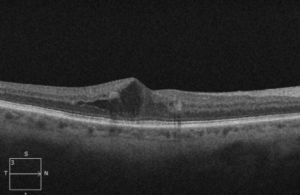
Optical Coherence Tomography (OCT)
OCT creates detailed cross-sectional images of the retina and helps detect diabetic macular edema. The image below shows dark spaces within the layers of the retina that represent macular edema.
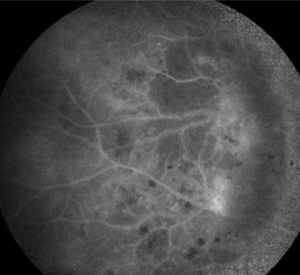
Fluorescein Angiography
This test uses fluorescent dye injected into a vein in the arm to evaluate blood flow and identify leaking or abnormal blood vessels. The image below shows darker gray areas that have poor blood flow from underlying diabetic retinopathy.
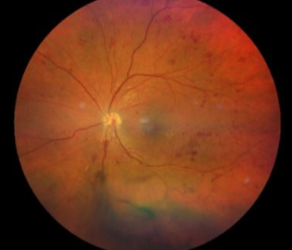
Fundus Photography
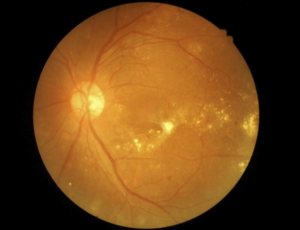
Retinal photographs document bleeding, swelling, and retinal changes over time.
Treatment for Diabetic Retinopathy
Treatment depends on the stage of disease and whether vision-threatening complications are present.
Blood Sugar and Blood Pressure Control
Good control of diabetes is one of the most important ways to slow progression.
Patients should work closely with their primary care doctor or endocrinologist to manage:
- Blood sugar
- Blood pressure
- Cholesterol
Anti-VEGF Injections
Anti-VEGF medications help reduce swelling and abnormal blood vessel growth.
Common medications include:
- Aflibercept
- Ranibizumab
- Bevacizumab
- Faricimab
These medications are given through injections into the eye during an office procedure.
Steroid Injections or Implants
Steroid medications may help reduce retinal swelling in some patients.
Laser Treatment
Laser treatment may be used to:
- Reduce retinal swelling
- Treat abnormal blood vessels
- Lower the risk of bleeding
Vitrectomy Surgery
Advanced diabetic retinopathy may require surgery if:
- Severe bleeding occurs
- Scar tissue develops
- Retinal detachment occurs
Can Diabetic Retinopathy Be Prevented?
Although diabetic retinopathy cannot always be completely prevented, the risk can be reduced by:
- Maintaining good blood sugar control
- Controlling blood pressure and cholesterol
- Avoiding smoking
- Exercising regularly
- Keeping annual dilated eye examinations
Early detection is extremely important because treatment is often most effective before major vision loss occurs.
What Is the Prognosis?
Many patients maintain good vision with proper monitoring and treatment.
However, untreated diabetic retinopathy can lead to:
- Severe vision loss
- Vitreous hemorrhage
- Retinal detachment
- Blindness
Regular follow-up with a retina specialist is critical.
Frequently Asked Questions
Can diabetic retinopathy cause blindness?
Yes. Severe untreated diabetic retinopathy can lead to permanent vision loss or blindness. Early diagnosis and treatment greatly reduce this risk.
If my vision is normal, do I still need eye exams?
Yes. Diabetic retinopathy may not cause symptoms early on. Regular dilated eye exams help detect problems before vision is affected.
Can diabetic retinopathy improve?
In some cases, diabetic retinopathy and diabetic macular edema improve with treatment and better diabetes control. However, ongoing monitoring is usually necessary.
More Information
For additional patient information, visit the American Society of Retina Specialists Diabetic Retinopathy Page