
Uveitis
Uveitis is a term used to describe inflammation inside the eye. It can affect one or both eyes and may occur suddenly or develop gradually over time. Uveitis is an important cause of vision loss worldwide, but with early diagnosis and appropriate treatment, many patients maintain good vision and avoid serious complications.
Because uveitis can sometimes be associated with infections or autoimmune diseases affecting other parts of the body, a thorough evaluation is often necessary to determine the underlying cause.
What Is Uveitis?
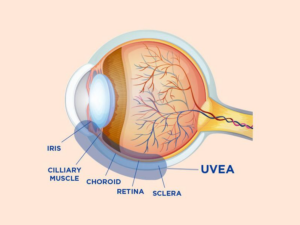
The uvea is the middle layer of the eye and includes three structures:
- The iris, the colored part of the eye
- The ciliary body, which helps produce fluid inside the eye and controls focusing
- The choroid, the layer of blood vessels that nourishes the retina
Uveitis refers to inflammation involving these structures. However, inflammation often extends to nearby tissues, including the retina, vitreous gel, optic nerve, and retinal blood vessels.
Uveitis can affect people of any age, including children.
Types of Uveitis
Doctors classify uveitis based on the location of inflammation.
Anterior Uveitis
This is the most common type.
It primarily affects the front part of the eye, including the iris.
Symptoms often include:
- Eye redness
- Eye pain
- Light sensitivity
- Blurred vision
Intermediate Uveitis
Inflammation occurs mainly within the vitreous gel.
Symptoms may include:
- Floaters
- Blurred vision
Redness and pain are often absent.
Posterior Uveitis
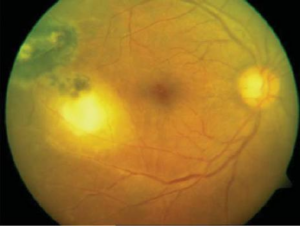
Inflammation affects the retina and choroid.
Symptoms can include:
- Blurred vision
- Floaters
- Distorted vision
- Blind spots
Panuveitis
Panuveitis involves inflammation throughout the entire eye.
It may cause a combination of the symptoms listed above.
What Causes Uveitis?
In many patients, a specific cause is never identified. However, uveitis may be associated with a variety of conditions.
Autoimmune and Inflammatory Diseases
These include:
- Ankylosing spondylitis
- Psoriatic arthritis
- Inflammatory bowel disease
- Sarcoidosis
- Juvenile idiopathic arthritis
- Behçet disease
- Multiple sclerosis
Infections
Certain infections can trigger uveitis, including:
- Herpes simplex virus
- Varicella-zoster virus
- Toxoplasmosis
- Syphilis
- Tuberculosis
- Cytomegalovirus
Eye Trauma
Injury to the eye may result in inflammation.
Medication-Related Causes
Rarely, certain medications may contribute to uveitis.
Idiopathic Uveitis
Despite extensive evaluation, many cases have no identifiable cause.
Symptoms of Uveitis
Symptoms vary depending on the type and severity of inflammation.
Common symptoms include:
- Blurred vision
- Floaters
- Eye redness
- Eye pain
- Sensitivity to light (photophobia)
- Distorted vision
- Blind spots
- Decreased vision
Symptoms may affect one eye or both eyes.
Some forms of uveitis develop suddenly, while others follow a chronic or recurrent course.
How Is Uveitis Diagnosed?
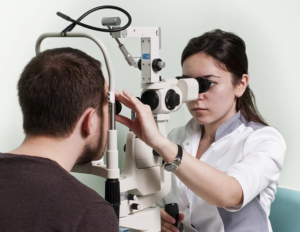
A retina specialist or uveitis specialist can diagnose uveitis through a comprehensive eye examination and, when appropriate, additional testing.
Medical History
Your doctor may ask about:
- Systemic medical conditions
- Joint pain
- Skin rashes
- Recent infections
- Travel history
- Medication use
Dilated Eye Examination
The examination may reveal:
- Inflammatory cells in the front of the eye
- Vitreous inflammation
- Retinal lesions
- Retinal vasculitis
- Choroidal inflammation
- Optic nerve swelling
Optical Coherence Tomography (OCT)
OCT helps detect:
- Macular edema
- Structural retinal changes
- Response to treatment
Fluorescein Angiography
This imaging study can identify:
- Retinal blood vessel leakage
- Retinal vasculitis
- Areas of inflammation
- Choroidal neovascularization
Laboratory Testing
Depending on the clinical findings, blood tests or imaging studies may be recommended to investigate potential underlying causes.
How Is Uveitis Treated?
Treatment depends on the cause, location, and severity of inflammation.
Corticosteroids
Steroids are often the first-line treatment.
They may be given as:
- Eye drops
- Oral medications
- Injections around the eye
- Injections inside the eye
- Intravenous medications
Immunomodulatory Therapy
Patients with chronic, recurrent, or severe noninfectious uveitis may require steroid-sparing medications, including:
- Methotrexate
- Mycophenolate mofetil
- Azathioprine
- Cyclosporine
- Biologic medications such as adalimumab
These treatments often involve collaboration with rheumatologists or other specialists.
Treatment of Infectious Causes
When infection is responsible, therapy is directed at the underlying organism and may include:
- Antibiotics
- Antiviral medications
- Antifungal medications
- Anti-parasitic medications
Management of Complications
Additional treatments may be necessary for complications such as:
- Cataracts
- Glaucoma
- Macular edema
- Retinal detachment
- Epiretinal membranes
What Is the Prognosis?
The outlook depends on:
- The underlying cause
- The location of inflammation
- How quickly treatment is initiated
- The presence of complications
Many patients achieve excellent control of inflammation and maintain good vision.
However, chronic or recurrent uveitis may require long-term treatment and monitoring.
Regular follow-up is essential because inflammation can recur even after periods of stability.
Living With Uveitis
If you have uveitis:
- Take medications exactly as prescribed.
- Keep all follow-up appointments.
- Report worsening symptoms promptly.
- Inform your physician about changes in your overall health.
- Do not stop steroid or immunosuppressive medications without medical guidance.
- Maintain regular communication between your eye specialist and other healthcare providers.
Understanding your condition and treatment plan can help protect your long-term vision.
Frequently Asked Questions (FAQ)
Is uveitis an infection?
Sometimes. Uveitis can result from infections, autoimmune diseases, trauma, medications, or may occur without an identifiable cause.
Can uveitis cause blindness?
It is possible, but rare. If left untreated, severe inflammation can lead to permanent vision loss. Early diagnosis and treatment significantly improve outcomes.
Will uveitis come back?
Some forms of uveitis occur only once, while others are chronic or recurrent and require long-term monitoring and treatment.