
Usher Syndrome
Usher syndrome is a rare inherited disorder that affects both hearing and vision. It is the most common cause of combined deafness and blindness that is inherited at birth. People with Usher syndrome are born with or develop hearing loss and later experience progressive vision loss due to retinitis pigmentosa (RP), a group of inherited retinal degenerations.
Although there is currently no cure for Usher syndrome, advances in genetic testing, hearing technology, low vision rehabilitation, and emerging gene therapies are improving quality of life and offering hope for future treatments.
Early diagnosis and coordinated care can help patients maximize both vision and hearing throughout their lives.
What Is Usher Syndrome?
Usher syndrome is a genetic condition that affects the function of specialized sensory cells in the eyes and inner ears.
The syndrome is characterized by:
- Hearing loss
- Progressive vision loss caused by retinitis pigmentosa
- In some forms, balance problems
Several different genes can cause Usher syndrome, including:
- USH2A
- MYO7A
- CDH23
- PCDH15
- CLRN1
- ADGRV1
Usher syndrome is usually inherited in an autosomal recessive pattern, meaning a child inherits one altered gene from each parent. Parents are typically healthy carriers who do not have symptoms.
How Does Usher Syndrome Affect Vision?
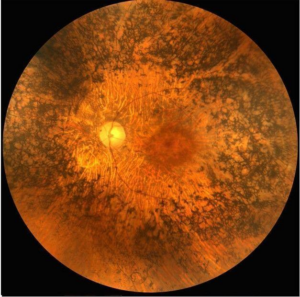
Vision loss in Usher syndrome occurs because of retinitis pigmentosa.
The retina contains two types of photoreceptor cells:
- Rods, which provide night and peripheral vision
- Cones, which provide central and color vision
In Usher syndrome, these photoreceptor cells gradually deteriorate over time.
Common visual symptoms include:
- Difficulty seeing at night
- Reduced peripheral vision
- Tunnel vision
- Difficulty adapting to dim lighting
- Problems navigating in unfamiliar environments
- Progressive loss of central vision in later stages
Types of Usher Syndrome
Usher syndrome is generally classified into three major types.
Type 1
Type 1 is the most severe form.
Features include:
- Profound hearing loss present at birth
- Significant balance problems
- Vision symptoms that often begin during childhood
Children with Type 1 may experience delayed walking because of vestibular dysfunction.
Type 2
Type 2 is the most common form.
Features include:
- Moderate to severe hearing loss present at birth
- Normal balance function
- Vision changes that usually begin during adolescence or early adulthood
Many individuals benefit from hearing aids.
Type 3
Type 3 is less common.
Features include:
- Progressive hearing loss that worsens over time
- Variable balance problems
- Progressive vision loss with onset that varies among individuals
Symptoms often develop later than in Types 1 and 2.
How Is Usher Syndrome Diagnosed?
Diagnosis typically involves evaluation by both eye and hearing specialists.
Comprehensive Eye Examination
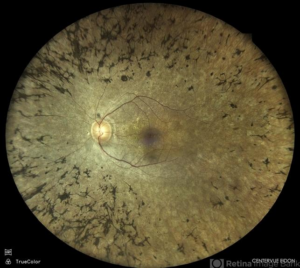
A retina specialist evaluates for signs of retinitis pigmentosa, including:
- Bone spicule pigmentation
- Narrowed retinal blood vessels
- Optic nerve pallor
- Cataracts
Visual Field Testing
This test measures peripheral vision and can detect the development of tunnel vision.
Optical Coherence Tomography (OCT)
OCT provides detailed images of retinal structure and can identify:
- Photoreceptor loss
- Macular edema
- Retinal thinning
Electroretinography (ERG)
ERG measures the retina’s electrical response to light and often demonstrates reduced retinal function.
Hearing Evaluation
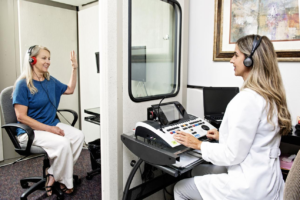
Audiology testing helps determine:
- Degree of hearing loss
- Type of hearing impairment
- Appropriate hearing interventions
Genetic Testing
Genetic testing can:
- Confirm the diagnosis
- Identify the responsible mutation
- Clarify inheritance patterns
- Determine eligibility for clinical trials and emerging therapies
How Is Usher Syndrome Treated?
There is currently no cure for Usher syndrome, but many supportive treatments can improve quality of life.
Hearing Management
Depending on the severity of hearing loss, treatment may include:
- Hearing aids
- Cochlear implants
- Speech therapy
- Educational accommodations
- Assistive listening devices
Low Vision Rehabilitation
Low vision services can provide:
- Magnification devices
- Electronic visual aids
- Smartphone accessibility tools
- Orientation and mobility training
- Occupational therapy strategies
Treatment of Retinal Complications
Some patients develop treatable complications such as:
- Cataracts
- Cystoid macular edema
Addressing these conditions may improve visual function.
Genetic Counseling
Genetic counseling helps families understand:
- Inheritance risks
- Family planning considerations
- Available testing options
Clinical Trials and Emerging Therapies
Researchers continue to investigate:
- Gene therapies
- Gene editing technologies
- Stem cell therapies
- Neuroprotective treatments
- Retinal implants
- Novel pharmacologic approaches
Participation in clinical trials may be appropriate for selected patients.
What Is the Prognosis?
The progression of Usher syndrome varies depending on the specific genetic mutation and disease subtype.
Many individuals:
- Maintain useful central vision for decades
- Benefit substantially from hearing interventions
- Remain independent with adaptive strategies and support services
Although vision and hearing changes can be challenging, advances in assistive technologies continue to improve daily functioning and quality of life.
Living With Usher Syndrome
Living with Usher syndrome often requires a multidisciplinary approach.
Helpful strategies include:
- Scheduling regular retinal examinations.
- Maintaining routine hearing evaluations.
- Pursuing genetic counseling and testing.
- Utilizing low vision and hearing rehabilitation services.
- Exploring educational and workplace accommodations.
- Staying informed about clinical trials and emerging treatments.
- Connecting with support organizations and advocacy groups.
Early intervention can make a significant difference in communication, mobility, education, and independence.
Frequently Asked Questions (FAQ)
Is Usher syndrome inherited?
Yes. Most cases are inherited in an autosomal recessive pattern, meaning both parents carry one altered copy of the responsible gene.
Will everyone with Usher syndrome become blind?
No. While progressive vision loss occurs, complete blindness is uncommon. Many individuals retain useful vision for many years.
Is there a cure for Usher syndrome?
Currently, there is no cure. However, ongoing research into gene therapies and other treatments offers hope for future advances.