
Leber Congenital Amaurosis (LCA)
Leber congenital amaurosis (LCA) is a rare inherited retinal disease that causes severe vision loss beginning at birth or during the first few months of life. It affects the retina, the light-sensitive tissue at the back of the eye that sends visual information to the brain.
LCA is one of the most severe forms of inherited retinal degeneration. Children with LCA often have significant visual impairment early in life, although the severity can vary depending on the specific genetic mutation involved.
Recent advances in genetic testing and gene therapy have transformed the diagnosis and treatment of some forms of LCA, offering hope to affected patients and families.
What Causes Leber Congenital Amaurosis?
LCA is caused by mutations in genes that are essential for normal retinal function and development.
More than 25 genes have been linked to LCA, including:
- RPE65
- CEP290
- GUCY2D
- CRB1
- RDH12
- AIPL1
These genetic mutations interfere with the ability of retinal cells to process light and maintain healthy vision.
LCA is usually inherited in an autosomal recessive pattern, meaning a child inherits one abnormal gene from each parent.
Symptoms of LCA
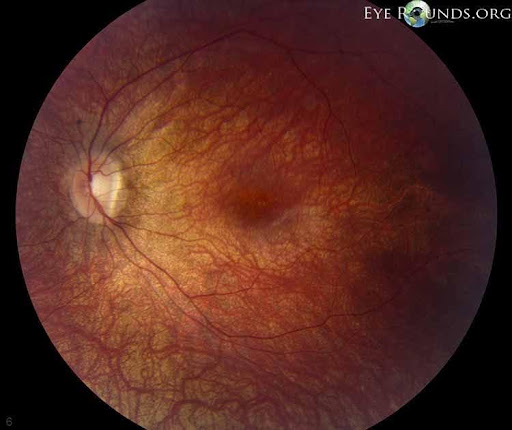
Symptoms typically appear at birth or during infancy.
Common signs and symptoms include:
- Severe vision impairment from birth
- Poor visual tracking
- Reduced response to light
- Nystagmus (involuntary eye movements)
- Eye rubbing or pressing (Franceschetti oculodigital sign)
- Extreme farsightedness in some patients
- Difficulty seeing in dim light
The severity of vision loss varies depending on the underlying genetic cause.
Some children retain limited useful vision, while others have profound visual impairment
How Is LCA Diagnosed?
Early diagnosis is important for visual rehabilitation, genetic counseling, and identifying patients who may benefit from emerging treatments.
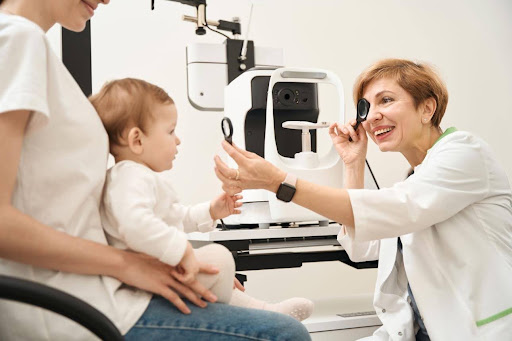
Comprehensive Eye Examination
A pediatric ophthalmologist or retinal specialist evaluates visual function and retinal health.
Electroretinography (ERG)
ERG measures the electrical responses of the retina to light stimulation.
In LCA, ERG responses are often severely reduced or absent.
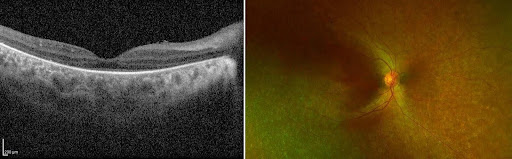
Optical Coherence Tomography (OCT)
OCT provides detailed images of retinal structure and can help identify specific patterns associated with certain genetic forms of LCA.
Genetic Testing
Genetic testing is a critical part of diagnosis.
Testing can:
- Confirm the diagnosis
- Identify the specific genetic mutation
- Determine eligibility for gene therapy
- Provide information for family planning
Treatment for Leber Congenital Amaurosis
Historically, treatment focused on supportive care and vision rehabilitation. Today, advances in genetic medicine have created new treatment opportunities for selected patients.
Gene Therapy
For patients with confirmed RPE65-associated LCA, gene therapy is available.
The FDA-approved treatment, Luxturna, delivers a healthy copy of the RPE65 gene directly to retinal cells.
Clinical studies have shown that eligible patients may experience:
- Improved functional vision
- Better navigation in low-light environments
- Improved light sensitivity
Not all forms of LCA qualify for currently available gene therapy, but additional treatments are being studied.
Low Vision Rehabilitation
Children with LCA often benefit from:
- Low vision specialists
- Educational support services
- Orientation and mobility training
- Assistive technology
Genetic Counseling
Families may benefit from counseling to understand inheritance patterns and future family planning considerations.
Research and Future Therapies
Inherited retinal disease research is advancing rapidly.
Investigational approaches include:
- Additional gene therapies
- Gene editing technologies
- Stem cell treatments
- Neuroprotective therapies
- Retinal implants
Many clinical trials are currently underway for different forms of LCA
What Is the Prognosis?
The outlook for LCA varies depending on the specific genetic mutation.
Some forms remain relatively stable, while others progress over time.
Although many patients experience significant visual impairment throughout life, advances in genetic diagnosis, rehabilitation services, and emerging therapies continue to improve outcomes and quality of life.
Early diagnosis and referral to specialists in inherited retinal disease are important.
Living With LCA
Families affected by LCA often benefit from a multidisciplinary approach that includes:
- Pediatric ophthalmology care
- Retina specialists
- Genetic counseling
- Low vision rehabilitation
- Educational support programs
Early intervention services can help children maximize independence and developmental progress.Frequently Asked Questions
Is Leber congenital amaurosis inherited?
Yes. LCA is a genetic condition and is most commonly inherited in an autosomal recessive pattern.
Can LCA be treated?
Some forms of LCA, particularly those caused by mutations in the RPE65 gene, can be treated with gene therapy. Other forms are currently being studied in clinical trials.
Will all children with LCA become completely blind?
Not necessarily. Vision varies significantly depending on the specific genetic mutation. Some patients retain useful vision throughout life, while others experience more severe visual impairment.
Frequently Asked Questions (FAQ)
Is Leber congenital amaurosis inherited?
Can LCA be treated?
Will all children with LCA become completely blind?
More Information
For additional patient information, visit the American Society of Retina Specialists Leber Congenital Amaurosis Page