
Toxoplasmosis (Ocular Toxoplasmosis)
Ocular toxoplasmosis is the most common cause of infectious posterior uveitis worldwide. It occurs when the parasite Toxoplasma gondii infects the retina and choroid, causing inflammation and damage to the back of the eye.
The condition can affect people of all ages and may occur either after a congenital infection (acquired before birth) or following infection later in life. Many patients experience episodes of active inflammation that eventually heal with retinal scarring. While some people have only a single episode, others may have recurrent flare-ups throughout their lives.
With prompt diagnosis and appropriate treatment, many patients maintain useful vision and minimize long-term complications.
What Is Ocular Toxoplasmosis?
Ocular toxoplasmosis occurs when Toxoplasma gondii, a microscopic parasite, infects the retina and surrounding tissues.
The parasite can remain dormant in the eye for years. In some individuals, it can reactivate, causing repeated episodes of retinal inflammation known as retinochoroiditis.
Inflammation can damage the retina and leave permanent scars. The impact on vision depends largely on the location and severity of the infection.
How Do People Become Infected?
Toxoplasma gondii infection is common worldwide, and most infected individuals never develop eye problems.
People may acquire the parasite through:
- Eating undercooked or raw meat containing tissue cysts
- Exposure to contaminated soil
- Handling cat litter contaminated with infected cat feces
- Drinking contaminated water
- Mother-to-child transmission during pregnancy (congenital toxoplasmosis)
- Rarely, organ transplantation or blood transfusion
It is important to note that simply owning a cat does not mean a person will develop toxoplasmosis.
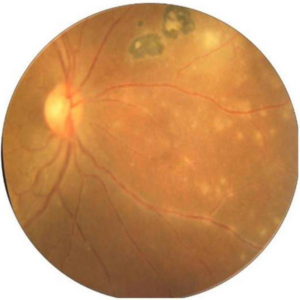
What Are the Symptoms?
Symptoms vary depending on the location and severity of inflammation.
Common symptoms include:
Blurred Vision
Vision may become hazy or reduced, particularly if the macula is involved.
Floaters
Patients often notice dark spots, cobwebs, or moving shadows caused by inflammatory cells within the vitreous gel.
Eye Redness
Although less common than with anterior uveitis, redness may occur.
Eye Pain or Discomfort
Some patients experience mild aching or light sensitivity.
Sensitivity to Light
Bright lights may become uncomfortable during active inflammation.
Distorted Vision
Objects may appear wavy or misshapen if central retinal structures are affected.
Symptoms often develop over days to weeks.
How Is Ocular Toxoplasmosis Diagnosed?
A retina specialist or uveitis specialist can often diagnose ocular toxoplasmosis based on characteristic examination findings.
Dilated Eye Examination
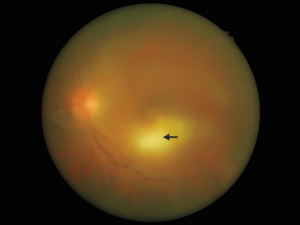
Classic findings include:
- A white area of active retinal inflammation
- Dense vitreous inflammation (“headlight in the fog” appearance)
- Adjacent pigmented retinal scars from prior episodes
- Retinal vasculitis
Optical Coherence Tomography (OCT)
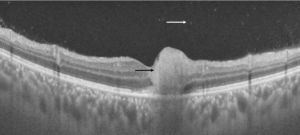
OCT provides detailed images of the retina and may identify:
- Macular edema
- Structural retinal changes
- Epiretinal membranes
- Vitreoretinal traction
Fluorescein Angiography
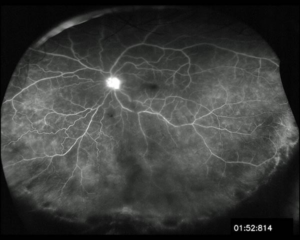
This test can evaluate:
- Retinal blood vessel leakage
- Areas of inflammation
- Macular involvement
Laboratory Testing
Blood tests for Toxoplasma antibodies may support the diagnosis in selected cases.
In unusual situations, additional testing of ocular fluid may be recommended.
How Is Ocular Toxoplasmosis Treated?
Not every case requires treatment. Small peripheral lesions with minimal inflammation may simply be monitored.
Treatment is more likely to be recommended when inflammation threatens vision or causes significant symptoms.
Anti-Parasitic Medications
Medications used to treat toxoplasmosis may include:
- Pyrimethamine
- Sulfadiazine
- Trimethoprim-sulfamethoxazole (Bactrim®)
- Clindamycin
- Azithromycin
The specific regimen depends on the patient’s medical history and physician preference.
Corticosteroids
Steroids may be used to reduce inflammation and limit tissue damage.
These medications are typically started after anti-parasitic therapy has been initiated.
Steroids should not generally be used alone in active toxoplasmosis because they may worsen the infection.
Intravitreal Therapy
In selected cases, medications may be injected directly into the eye to control infection and inflammation.
Surgical Treatment
Vitrectomy surgery may occasionally be necessary to manage complications such as:
- Persistent vitreous opacity
- Retinal detachment
- Epiretinal membrane formation
Possible Complications
Complications of ocular toxoplasmosis may include:
- Permanent retinal scars
- Recurrent episodes of inflammation
- Macular edema
- Epiretinal membranes
- Cataracts
- Glaucoma
- Choroidal neovascularization
- Retinal detachment
- Vision loss
The risk of visual impairment is greatest when lesions involve the macula or optic nerve.
What Is the Prognosis?
The outlook depends on:
- The location of the retinal lesion
- The severity of inflammation
- The frequency of recurrences
- How quickly treatment is initiated
Many patients recover good vision after treatment, particularly when lesions are located away from the central retina.
However, retinal scars are permanent, and recurrent episodes can occur months or years later.
Regular follow-up is important because early recognition of recurrence often leads to better outcomes.
Living With Ocular Toxoplasmosis
If you have been diagnosed with ocular toxoplasmosis:
- Keep all follow-up appointments.
- Report new floaters or blurred vision promptly.
- Take medications exactly as prescribed.
- Inform your physician if you are pregnant or immunocompromised.
- Practice food safety by avoiding undercooked meat.
- Use appropriate precautions when handling cat litter or gardening.
Understanding the warning signs of recurrence can help protect long-term vision.
Frequently Asked Questions (FAQ)
Can I catch ocular toxoplasmosis from my cat?
Not directly. Most infections occur through ingestion of contaminated food, water, or soil. Proper hand hygiene and precautions when handling cat litter can help reduce risk.
Will the infection come back?
It is possible. Ocular toxoplasmosis can reactivate, sometimes years after the initial episode. Regular follow-up and prompt evaluation of new symptoms are important.
Will I lose my vision?
Many patients maintain good vision, especially when treatment is started promptly. Vision loss is more likely if the infection affects the macula or optic nerve.