
A new option for patients with MacTel
What Is Macular Telangiectasia (MacTel) Type 2?
Macular Telangiectasia Type 2 (MacTel) is a rare, progressive retinal condition that affects the macula—the central part of the retina responsible for detailed vision. It differs from age-related macular degeneration (AMD), although both impact central vision.
In MacTel:
- Tiny abnormal blood vessels develop near the macula
- Retinal support cells (Müller cells) become dysfunctional
- Photoreceptors gradually degenerate
Patients may notice blurred or grayed-out central vision, difficulty reading, missing letters, or trouble recognizing faces. MacTel usually affects both eyes and progresses slowly over time.
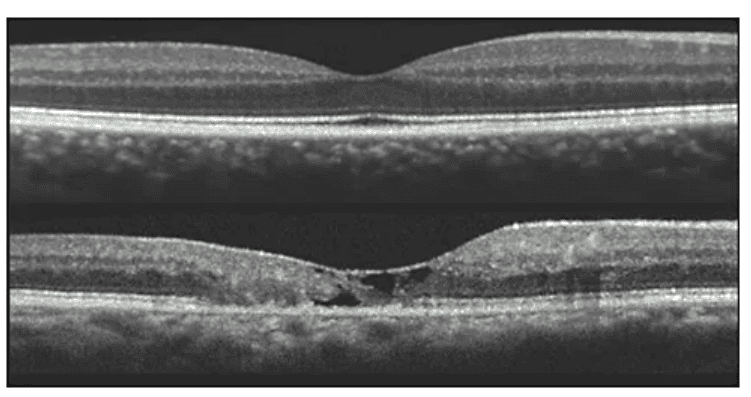
Top OCT: Normal retinal layers. Bottom OCT shows classic Mac Tel findings of ILM
drape, EZ loss, and pseudo-cavitations that are responsible for vision loss.
What Is Encelto™?
Encelto™ (revakinagene taroretcel-lwey) is an FDA-approved implant therapy specifically designed to treat Macular Telangiectasia Type 2. Unlike traditional eye injections, Encelto is designed to protect and support retinal cells affected by MacTel, representing a major shift from observation to active treatment.
How Does Encelto Work?
MacTel involves dysfunction of Müller cells, which are critical for retinal health. Encelto long-term neuroprotective support to retinal tissue and slowing photoreceptor degeneration. The goal is not to cure MacTel but to slow the progression of vision loss.
How Is the Treatment Performed?
Encelto is delivered through a small surgical procedure performed by a retina specialist.
- The procedure takes place in an operating room
- Local anesthesia (with possible light sedation) is used
- A small implant is placed inside the eye
- The implant continuously releases therapeutic factor
It is typically a one-time implant per treated eye, and patients go home the same day.
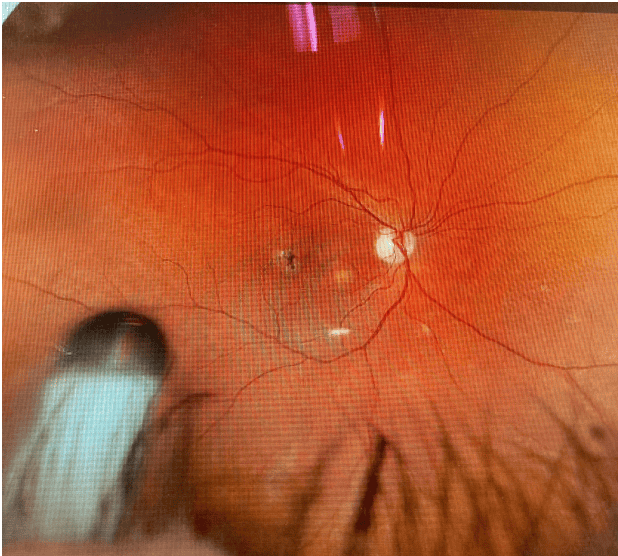
Encelto Implant at Retina and Vitreous Consultants of WI one day after surgery.
What Benefits Can Patients Expect?
Clinical studies show that Encelto can slow the loss of photoreceptors, reduce progression of retinal atrophy, and help preserve reading vision longer. Vision improvement is not guaranteed. The primary goal is slowing further vision loss, particularly when treated earlier in the disease course.
Who Is a Candidate?
You may be a candidate if you have confirmed MacTel Type 2 with progressive photoreceptor loss and have not developed advanced scarring or severe atrophy. Evaluation includes OCT imaging, fundus photography, and visual acuity testing. Your retina specialist will determine whether the benefits outweigh potential risks.
What Are the Risks?
As with any intraocular surgery, risks include infection, retinal detachment, bleeding, increased eye pressure, or inflammation. These complications are uncommon but possible and will be discussed prior to surgery.
How Is This Different From Anti-VEGF Injections?
Many retinal diseases are treated with anti-VEGF injections, which target abnormal blood vessel growth and leakage. In MacTel, the primary issue is neurodegeneration rather than fluid. Encelto addresses retinal cell support failure rather than vascular leakage.
What Happens After Surgery?
After implantation, patients use prescribed eye drops and return for follow-up visits with imaging and vision monitoring. The implant remains inside the eye and continuously releases therapeutic support without requiring monthly injections.
Why Early Diagnosis Matters
Because Encelto aims to preserve photoreceptors before advanced damage occurs, early diagnosis is important. Advanced imaging allows detection of subtle structural changes before significant vision decline.
Final Thoughts
A diagnosis of MacTel can feel overwhelming. Encelto offers a targeted approach designed to slow disease progression and preserve vision. If you have MacTel or suspect early symptoms, schedule a consultation with your retina specialist to discuss whether Encelto may be appropriate for you. In 2025, Retina and Vitreous Consultants of Wisconsin became 1 of 6 national Centers of Excellence for Encelto implantation. We are the only practice in Wisconsin to perform this Encelto, and we receive consultations from other retinal specialists across the United States to perform this procedure.