
Lattice Degeneration
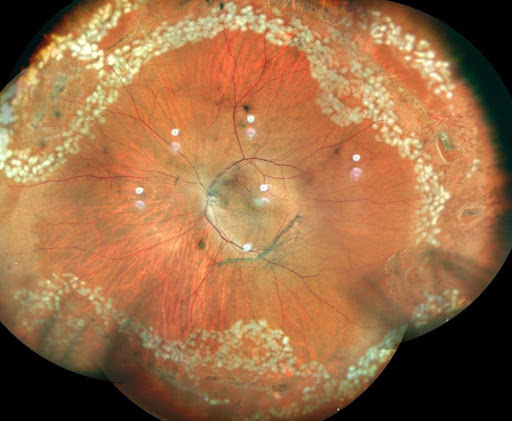
Lattice degeneration is a common condition that affects the peripheral retina, the thin layer of light-sensitive tissue lining the back of the eye. In lattice degeneration, areas of the retina become thinner and develop a characteristic “lattice-like” appearance.
Most people with lattice degeneration never develop serious eye problems and may not even know they have the condition. However, in some cases, lattice degeneration can increase the risk of retinal tears or retinal detachment.
Because of this risk, regular eye examinations are important, especially for patients who are nearsighted or have symptoms such as flashes or floaters.
What Causes Lattice Degeneration?
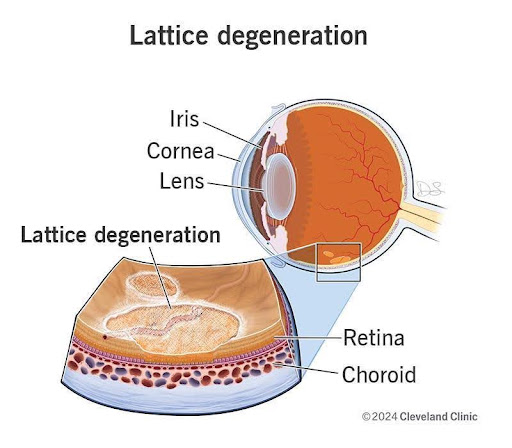
The exact cause of lattice degeneration is not fully understood, but it is believed to be related to thinning and weakening of the peripheral retina.
Lattice degeneration is more common in:
- Nearsighted (myopic) patients
- Individuals with a family history of retinal detachment
- Patients with certain inherited retinal conditions
It often affects both eyes.
The vitreous gel inside the eye may adhere more strongly to areas of lattice degeneration. As the vitreous changes with age, traction on these weak areas can sometimes create retinal tears.
How Common Is Lattice Degeneration?
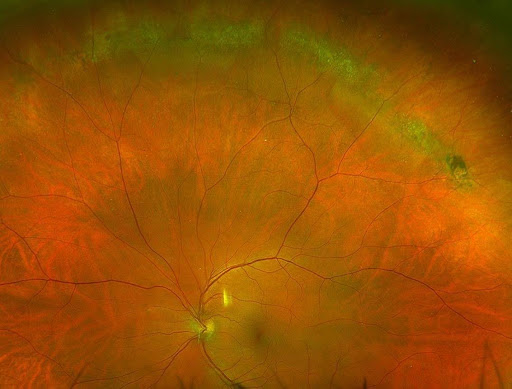
Lattice degeneration is relatively common and occurs in approximately 6–10% of the population.
Most people with lattice degeneration never experience retinal detachment.
However, because retinal tears and detachments can threaten vision, recognizing symptoms early is very important.
Symptoms of Lattice Degeneration
Lattice degeneration itself usually causes no symptoms.
Many patients are diagnosed during a routine dilated eye examination.
If a retinal tear develops, symptoms may include:
- Sudden floaters
- Flashes of light
- A curtain or shadow in vision
- Peripheral vision loss
- Sudden blurry vision
These symptoms may indicate a retinal tear or retinal detachment and require urgent evaluation.
How Is Lattice Degeneration Diagnosed?
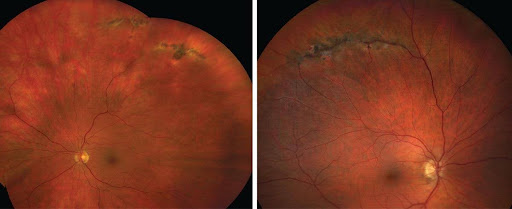
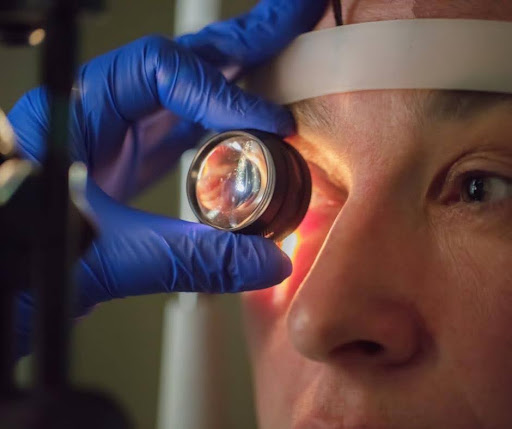
A retinal specialist or eye doctor diagnoses lattice degeneration during a dilated retinal examination.
Dilated Eye Examination
Special lenses are used to examine the peripheral retina for:
- Areas of retinal thinning
- Retinal holes
- Retinal tears
- Vitreous traction
Wide-Field Retinal Imaging
Wide-field retinal photographs may help document areas of lattice degeneration and monitor changes over time.
Ultrasound Imaging
If the retina cannot be seen clearly due to bleeding or cataracts, ultrasound may help evaluate for retinal detachment.
Can Lattice Degeneration Cause Retinal Detachment?
Yes. Although most patients never develop complications, lattice degeneration is associated with an increased risk of retinal tears and retinal detachment.
This happens when:
- The vitreous gel pulls on weak retinal areas
- A retinal tear forms
- Fluid passes through the tear
- The retina separates from the back wall of the eye
Retinal detachment is a serious condition that requires urgent treatment.
Treatment for Lattice Degeneration
Observation
Most patients with lattice degeneration do not require treatment.
Regular monitoring is usually recommended, especially if there are:
- No symptoms
- No retinal tears
- No history of retinal detachment
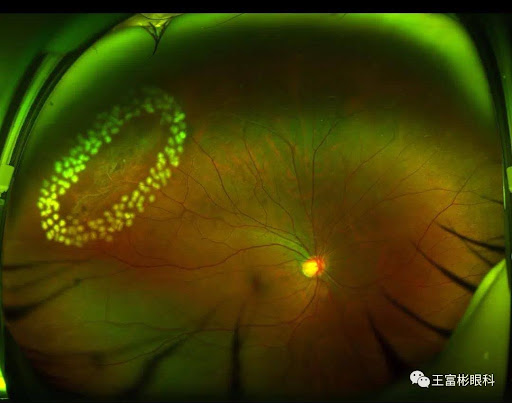
Preventive Laser Treatment
Laser treatment may be recommended in selected cases, especially if:
- A retinal tear is present
- Symptoms develop
- The other eye has experienced retinal detachment
- High-risk features are identified
Laser treatment creates small scars around weak retinal areas to help reduce the risk of retinal detachment.
Cryotherapy
Freezing treatment (cryotherapy) may occasionally be used instead of laser treatment.
Surgery for Retinal Detachment
If retinal detachment occurs, surgery may be necessary to repair the retina and preserve vision.
Possible surgical treatments include:
- Pneumatic retinopexy
- Scleral buckle
- Vitrectomy surgery
What Is the Prognosis?
The outlook for lattice degeneration is generally excellent.
Most patients:
- Never develop retinal detachment
- Maintain normal vision
- Require only periodic monitoring
The key to preserving vision is recognizing symptoms of retinal tears or detachment early and seeking prompt treatment.
Living With Lattice Degeneration
Patients with lattice degeneration should:
- Keep regular dilated eye examinations
- Seek urgent care for flashes or floaters
- Report curtain-like vision loss immediately
- Wear protective eyewear during sports or activities with risk of eye injury
Patients who are highly nearsighted or have a family history of retinal detachment may require closer monitoring.
Frequently Asked Questions (FAQ)
Does lattice degeneration always lead to retinal detachment?
Can lattice degeneration be treated preventively?
Is lattice degeneration hereditary?
More Information
For additional patient information, visit the American Society of Retina Specialists Lattice Degeneration Page
References