
Macular Edema
Macular edema is a condition in which fluid accumulates within the macula, the central portion of the retina responsible for sharp, detailed vision. The buildup of fluid causes the macula to swell and thicken, leading to blurred or distorted central vision.
Macular edema is not a disease itself but rather a complication of several retinal and systemic conditions. It is one of the most common causes of vision loss seen by retina specialists. Fortunately, advances in retinal imaging and treatment have significantly improved outcomes for many patients.
What Is the Macula?
The macula is the small central area of the retina that allows us to:
- Read
- Recognize faces
- Drive
- See fine details
- Distinguish colors
When fluid accumulates within the macula, these activities can become difficult because the retina is unable to function normally.
What Causes Macular Edema?
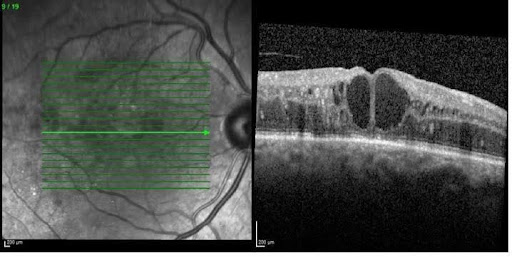
Macular edema develops when blood vessels in or near the retina leak fluid into the macula.
Common causes include:
Diabetic Retinopathy
Diabetes can damage retinal blood vessels, causing leakage and swelling. Diabetic macular edema is one of the most common causes of vision loss in patients with diabetes.
Retinal Vein Occlusion
Blocked retinal veins can cause fluid accumulation and swelling in the macula.
Age-Related Macular Degeneration (AMD)
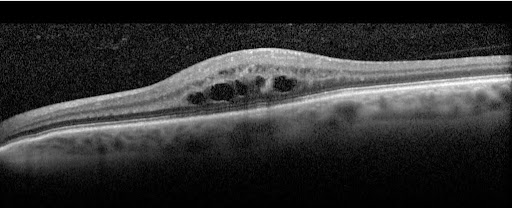
The wet form of AMD may lead to fluid leakage beneath or within the retina.
Eye Surgery
Macular edema may occasionally develop after cataract surgery, a condition known as cystoid macular edema (CME).
Uveitis
Inflammation inside the eye can cause retinal swelling and fluid accumulation.
Other Causes
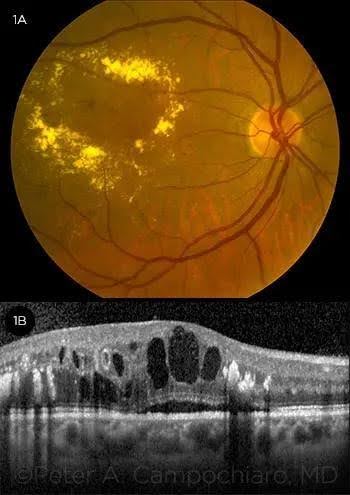
Additional causes include:
- Epiretinal membranes
- Retinal vascular diseases
- Radiation retinopathy
- Certain medications
- Inherited retinal disorders
Symptoms of Macular Edema
Symptoms depend on the amount and location of swelling.
Common symptoms include:
- Blurred central vision
- Distorted or wavy vision
- Difficulty reading
- Reduced color perception
- Trouble recognizing faces
- Dark or blurry spots in central vision
Symptoms may develop gradually or suddenly depending on the underlying cause.
Peripheral (side) vision is often unaffected.
How Is Macular Edema Diagnosed?
A retinal specialist can diagnose macular edema through a dilated eye examination and specialized imaging.
Optical Coherence Tomography (OCT)
OCT is the most important test for diagnosing macular edema.
It creates detailed cross-sectional images of the retina and can show:
- Retinal thickening
- Fluid-filled cysts
- Subretinal fluid
- Changes in retinal anatomy
OCT also helps monitor response to treatment over time.
Fluorescein Angiography
This test uses fluorescent dye injected into a vein in the arm to identify leaking blood vessels.
Fundus Photography
Retinal photographs document swelling and associated retinal disease.
Treatment for Macular Edema
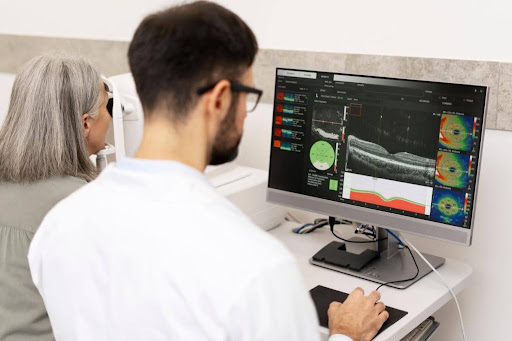
Treatment depends on the underlying cause and severity of swelling.
Anti-VEGF Injections
Anti-VEGF medications are among the most common treatments for macular edema.
These medications help reduce:
- Fluid leakage
- Abnormal blood vessel growth
- Retinal swelling
Common anti-VEGF medications include:
- Aflibercept
- Ranibizumab
- Bevacizumab
- Faricimab
Many patients require a series of injections over time.
Steroid Therapy
Steroids may help reduce inflammation and swelling.
Treatment options include:
- Steroid eye drops
- Steroid injections
- Long-acting steroid implants
Laser Treatment
Laser therapy may be used in selected cases, particularly for diabetic retinopathy or retinal vein occlusions.
Treating the Underlying Disease
Managing the root cause is critical.
Examples include:
- Improving blood sugar control in diabetes
- Treating retinal vein occlusions
- Managing eye inflammation
- Treating wet macular degeneration
What Is the Prognosis?
The outlook for macular edema depends on:
- The underlying cause
- How quickly treatment begins
- The duration of swelling
- Overall retinal health
Many patients experience stabilization or improvement of vision with appropriate treatment.
However, chronic untreated swelling can lead to permanent retinal damage and vision loss.
Regular follow-up is important because recurrence can occur.
Living With Macular Edema
Patients with macular edema should:
- Keep scheduled retina appointments
- Monitor vision changes
- Use an Amsler grid if recommended
- Control systemic conditions such as diabetes and hypertension
- Report new visual symptoms promptly
Early treatment often provides the best opportunity to preserve vision.
Frequently Asked Questions (FAQ)
Is macular edema the same as macular degeneration?
Can macular edema be cured?
Many cases can be successfully treated and controlled, although some patients require ongoing treatment to prevent recurrence.
Can vision improve after treatment?
More Information
For additional patient information, visit the American Society of Retina Specialists Macular Edema Page